Choosing the Right Flooring for Senior Safety: Non-Slip Options
Choosing the Right Flooring for Senior Safety: Non-Slip Options
Flooring is the literal foundation of home safety for seniors, yet it is often overlooked in favor of more visible modifications like grab bars and railings. The wrong flooring contributes to falls; the right flooring prevents them. According to the National Floor Safety Institute, floors and flooring materials contribute directly to over 2 million fall injuries annually. Choosing the right flooring for senior safety with non-slip properties is one of the most impactful home modifications you can make.
This guide compares the most common flooring options through the lens of senior safety, comfort, and practicality.
What Makes Flooring Senior-Safe?
Before comparing specific materials, understand the key properties that make flooring safe for seniors:
- Coefficient of Friction (COF): This measures slip resistance. A COF of 0.5 or higher is considered safe for walking. Higher is better for senior safety
- Impact absorption: Flooring that has some give reduces injury severity when falls do occur
- Matte finish: Glossy floors create glare that impairs depth perception, especially for seniors with vision changes
- Level surface: Transitions between flooring types create trip hazards. Minimal or flush transitions are essential
- Wheelchair and walker compatibility: The floor should allow mobility aids to roll smoothly without catching
Luxury Vinyl Plank (LVP): Best Overall for Seniors
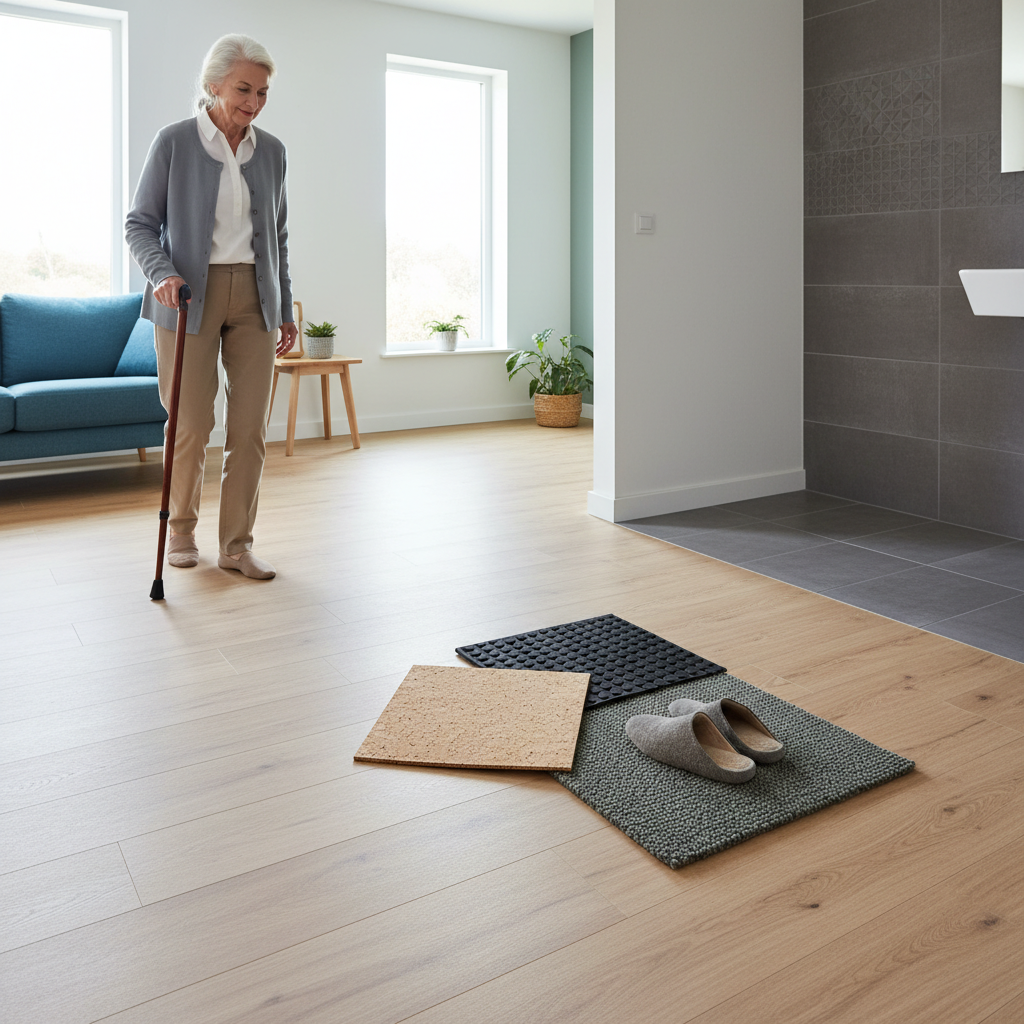
Luxury vinyl plank flooring has emerged as the top recommendation from aging-in-place specialists for good reason. It combines slip resistance, comfort, durability, and aesthetic appeal.
Why LVP Works for Seniors
LVP has a naturally high coefficient of friction, especially textured varieties that mimic wood grain. The material has slight cushioning compared to hard tile or stone, which reduces impact during falls. It is completely waterproof, making it safe in bathrooms and kitchens where water exposure is common. Modern LVP is virtually indistinguishable from real hardwood, so seniors who resist institutional-looking modifications will accept it readily.
Pros: Excellent slip resistance, waterproof, comfortable underfoot, realistic wood appearance, wheelchair and walker friendly
Cons: Can be damaged by heavy furniture, lower-quality brands may contain VOCs, not as eco-friendly as natural materials
Best for: Whole-home flooring replacement, bathrooms, kitchens
Cost: $2-$7 per square foot installed
Cork Flooring: Best for Comfort and Impact Absorption
Cork is a natural flooring material that offers exceptional cushioning and warmth underfoot. Its natural give absorbs impact, potentially reducing injury severity during falls.
Why Cork Works for Seniors
Cork's cellular structure creates millions of tiny air pockets that compress under weight and spring back, providing natural shock absorption. This cushioning effect reduces fatigue during standing and walking while also softening the impact of falls. Cork is also naturally slip-resistant and warm underfoot, eliminating the cold shock that can cause instability when seniors step onto floor surfaces.
Pros: Superior impact absorption, naturally warm, slip-resistant, hypoallergenic, quiet
Cons: Can be dented by furniture, requires periodic resealing, not waterproof without sealant, limited design options
Best for: Bedrooms, living rooms, areas where falls are most likely
Cost: $3-$8 per square foot installed
Rubber Flooring: Best for Bathrooms and High-Risk Areas
Rubber flooring provides the highest slip resistance of any flooring material and is the standard in commercial facilities where fall prevention is critical.
Why Rubber Works for Seniors
The coefficient of friction on rubber flooring is significantly higher than other materials, maintaining grip even when wet. This makes it ideal for bathrooms, laundry rooms, and kitchen areas near sinks. Rubber also provides excellent impact absorption, and the material is inherently anti-microbial.
Pros: Highest slip resistance, excellent wet grip, impact absorbing, anti-microbial, extremely durable
Cons: Limited aesthetic appeal, can have a strong odor when new, limited color and pattern options
Best for: Bathrooms, laundry rooms, garage entries, exercise areas
Cost: $4-$10 per square foot installed
Low-Pile Carpet: Best for Bedrooms
Low-pile carpet (with a pile height of half an inch or less) provides warmth, cushioning, and moderate slip resistance without the tripping hazard of thick, high-pile carpet.
Why Low-Pile Carpet Works for Seniors
The soft surface provides comfort and fall cushioning, which is valuable in bedrooms where nighttime falls are common. Low-pile designs allow walkers and wheelchairs to roll without excessive resistance. The key is choosing a tight, low-pile carpet rather than plush or shag varieties that create tripping hazards and impede mobility aids.
Pros: Comfortable and warm, absorbs fall impact, affordable, reduces noise
Cons: Can hold allergens and moisture, stains more easily than hard surfaces, not suitable for bathrooms
Best for: Bedrooms, hallways in dry climates
Cost: $2-$5 per square foot installed
Flooring to Avoid
Some popular flooring types are not recommended for senior homes:
- Polished hardwood: Beautiful but dangerously slippery, especially with socks. If existing hardwood cannot be replaced, apply anti-slip finish
- Glossy tile: Extremely slippery when wet and provides no impact absorption. If tile is desired, choose matte, textured tile with a high COF rating
- High-pile carpet: Creates trip hazards and impedes mobility aids. Replace with low-pile alternatives
- Loose rugs and mats: Area rugs without secure anchoring are one of the leading causes of in-home falls. Either remove them or secure them with commercial-grade double-sided tape
Managing Flooring Transitions
Even the safest flooring becomes dangerous at transition points where different materials meet. Follow these guidelines:
- Use flush transition strips that create no raised edge
- Choose transition strips in contrasting colors for visibility
- Consider using the same flooring throughout the home to eliminate transitions entirely
- If height differences exist, use gradual ramps rather than abrupt edges
Frequently Asked Questions
Is laminate flooring safe for seniors?
Standard laminate flooring can be slippery, especially when wet or when seniors wear socks. If laminate is chosen for budget reasons, select a textured, matte-finish variety with a COF rating of 0.5 or higher. Apply anti-slip treatments to high-risk areas like hallways and near bathrooms.
How do I make existing hardwood floors safer?
If replacing the flooring is not feasible, apply a matte-finish anti-slip treatment to existing hardwood. These products add texture without significantly changing the floor's appearance. Also ensure seniors wear non-slip socks or shoes indoors, and remove all loose rugs.
What flooring is best for a senior using a wheelchair?
Luxury vinyl plank and low-pile commercial carpet are the best options for wheelchair users. Both allow smooth rolling without excessive resistance. Avoid thick carpet, rubber with heavy texture, and any flooring with raised transitions. The floor should be smooth enough for easy wheeling but textured enough to prevent wheelchair slipping on turns.
Conclusion
Flooring selection is a foundational safety decision for any senior home. Luxury vinyl plank offers the best all-around combination of safety, comfort, and aesthetics for most situations. For high-risk wet areas, rubber flooring provides unmatched slip resistance. For bedrooms, low-pile carpet offers warmth and fall cushioning. Whatever you choose, prioritize slip resistance, impact absorption, and smooth transitions between rooms. The right flooring can prevent falls before they happen, making it one of the most valuable home modifications available.
Written by