How to Help Seniors Manage Medications at Home
Medication management is one of the most critical — and most commonly mismanaged — aspects of senior home care. The Centers for Disease Control and Prevention estimates that adverse drug events cause approximately 177,000 emergency department visits among adults aged 65 and older each year. Many of these events are preventable and stem from missed doses, incorrect dosages, dangerous drug interactions, or confusion among multiple prescriptions. For seniors who take an average of five or more medications daily — a phenomenon known as polypharmacy — the margin for error is slim.
Helping seniors manage medications at home requires a combination of organization, communication, technology, and regular oversight. This guide covers the most effective strategies families and caregivers can use to keep their loved ones safe.
Understanding Why Medication Errors Happen
Before implementing solutions, it helps to understand the root causes of medication mismanagement among seniors. The American Pharmacists Association identifies several common factors:
- Complex regimens. A senior taking eight medications at different times of day, with different food requirements, is far more likely to make errors than someone on a simple regimen.
- Cognitive decline. Even mild cognitive impairment can make it difficult to remember whether a dose has been taken, what each pill is for, or when refills are needed.
- Vision and dexterity challenges. Small pills, tiny print on labels, and child-resistant caps can be nearly impossible for seniors with arthritis or vision loss.
- Cost-related non-adherence. The Commonwealth Fund reports that approximately 20 percent of adults aged 65 and older skip doses or cut pills in half to save money.
- Lack of understanding. Seniors may not fully understand why they are taking a medication or what happens if they stop, leading to intentional non-adherence.
Dr. Jerry Gurwitz, a geriatrician and researcher at the University of Massachusetts Medical School, notes that "the medication use process in the home setting is inherently more error-prone than in institutional settings because there is no nurse or pharmacist double-checking each dose."
Creating a Comprehensive Medication List
The foundation of safe medication management is an accurate, up-to-date medication list. The Institute for Safe Medication Practices (ISMP) recommends that this list include:
- The name of each medication (brand and generic).
- The purpose of each medication, written in plain language.
- The dosage and frequency.
- The prescribing physician.
- Any special instructions (take with food, avoid sunlight, do not crush).
- Known allergies and past adverse reactions.
Keep copies of this list in multiple locations: the senior's wallet or purse, on the refrigerator, and with each family member involved in care. Bring an updated copy to every medical appointment, emergency room visit, and pharmacy interaction. This single step can prevent dangerous drug interactions and duplication of prescriptions when multiple doctors are involved.
Pill Organizers and Automated Dispensers
For seniors who manage their own medications, a well-chosen organization system can make the difference between adherence and error.
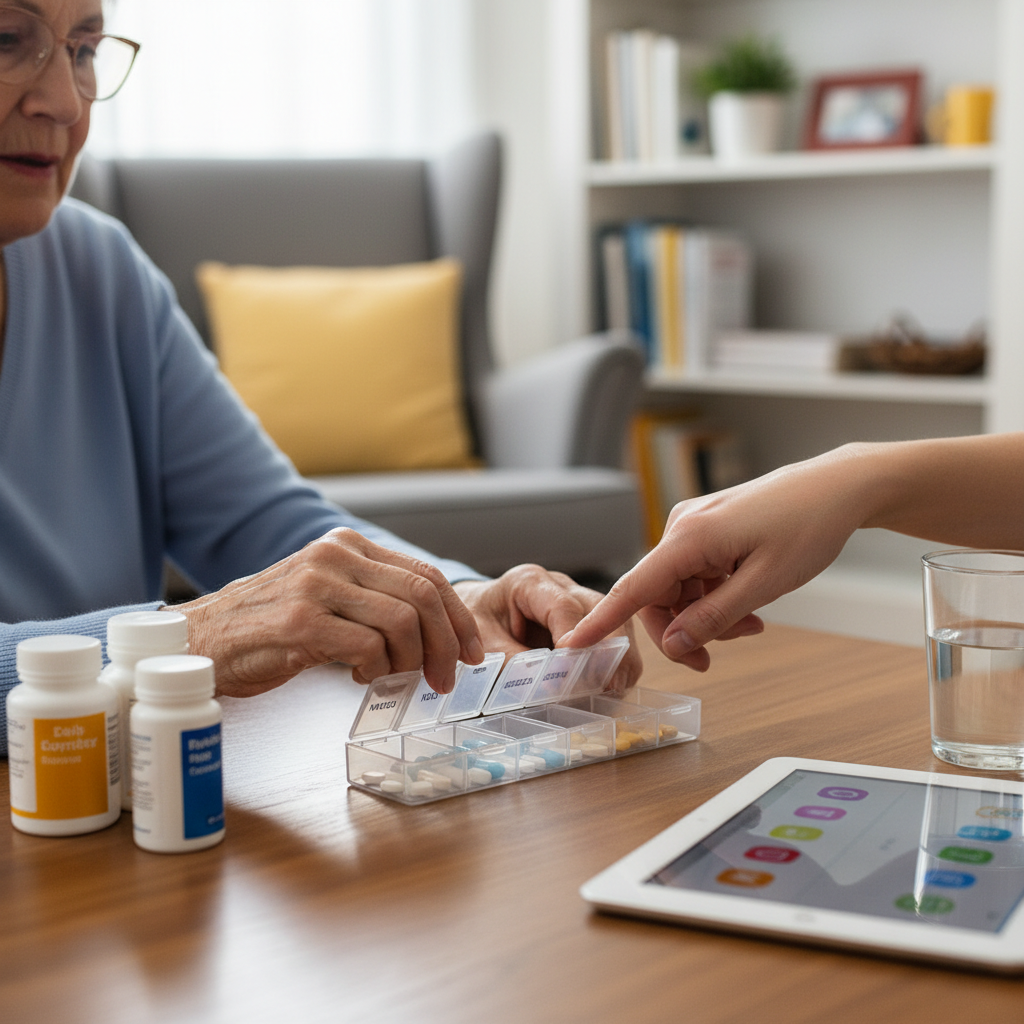
Basic pill organizers — the familiar plastic boxes with compartments labeled by day and time — are effective for seniors who are cognitively intact and take a relatively straightforward regimen. Look for organizers with large compartments, easy-to-open lids, and clear labeling. Many pharmacies will pre-fill weekly organizers at no charge if you bring the medications in.
Automated pill dispensers are a better option for seniors who need more structure. Devices like the Hero Health dispenser, MedMinder, and TabSafe store up to a month's supply of medications, dispense the correct pills at the programmed times, and alert the user with audible and visual reminders. Many models also notify caregivers via smartphone app if a dose is missed. Costs typically range from $30 to $60 per month for the device and monitoring service.
Pharmacy blister packaging is another option. Many pharmacies now offer medications pre-packaged in individually sealed doses organized by date and time. The senior simply tears open the correct packet — no sorting, counting, or organizing required. This service is often available at no additional cost through mail-order and local pharmacies.
Using Technology for Medication Reminders
For tech-comfortable seniors, a range of digital tools can support medication adherence:
- Smartphone apps like Medisafe, CareZone, and MyMeds send push notifications at dosing times, track adherence history, and alert family members when doses are missed.
- Smart speakers like Amazon Echo and Google Home can be programmed to announce medication reminders at specific times throughout the day.
- Smart pill bottles like AdhereTech use built-in sensors to detect when the bottle is opened and send reminders if it is not opened on schedule.
- Telehealth medication reviews allow seniors and caregivers to consult with pharmacists remotely to review regimens, identify potential interactions, and simplify complex schedules.
The Journal of the American Medical Informatics Association published a study showing that medication reminder apps improved adherence rates by 16 to 20 percent among older adults. However, technology works best when combined with human oversight, not as a replacement for it.
The Role of the Caregiver in Medication Safety
Whether family or professional, caregivers play a vital role in ensuring medication safety. Best practices include:
- Supervise medication administration whenever possible, especially for seniors with cognitive impairment. Watch the senior take the medication — do not simply leave it on the counter.
- Communicate regularly with physicians and pharmacists about side effects, adherence challenges, and potential simplifications to the regimen.
- Request a medication reconciliation after every hospital discharge, specialist visit, or change in prescriptions. The Joint Commission identifies medication reconciliation as one of the most important safety practices in health care.
- Store medications properly. Keep all prescriptions in a cool, dry place away from direct sunlight. Dispose of expired medications promptly — the FDA offers guidance on safe disposal methods.
- Never share medications between patients, even if they take the same drug. Dosages may differ, and cross-contamination risks exist.
When to Involve a Pharmacist or Physician
If your loved one is taking five or more medications, experiencing frequent side effects, or struggling to adhere to their regimen despite organizational tools, it is time to request a comprehensive medication review. Geriatric pharmacists specialize in identifying unnecessary medications, simplifying regimens, and finding lower-cost alternatives. Medicare Part D covers annual medication therapy management (MTM) services for qualifying beneficiaries, which includes a thorough review by a pharmacist.
Dr. Sarah Berry, a geriatrician at Harvard Medical School, advises families to "always ask whether each medication is still necessary. As people age, the risks and benefits of medications change, and what was appropriate five years ago may no longer be the best choice."
Conclusion
Helping seniors manage medications at home is not about taking control away from them — it is about building a system that supports their independence while minimizing risk. A clear medication list, an appropriate organization tool, regular communication with healthcare providers, and attentive caregiver involvement together form a safety net that prevents the majority of medication errors. Start with the simplest changes first, add technology where it helps, and never hesitate to involve a pharmacist or physician when the regimen becomes complex.
Written by