How to Senior-Proof Every Room in Your Home: A Complete Checklist
How to Senior-Proof Every Room in Your Home: A Complete Checklist
Making a home safe for aging in place does not have to be overwhelming or expensive. With a systematic approach and a thorough senior proof home checklist, you can address the most common hazards room by room. The National Institute on Aging reports that most falls happen at home, making these modifications not optional but essential for any senior planning to age in place.
This guide walks you through every room in the house with specific, actionable modifications that range from free changes to modest investments. Start with the highest-risk areas and work through the list at a pace that fits your budget and timeline.
Bathroom: The Highest-Risk Room
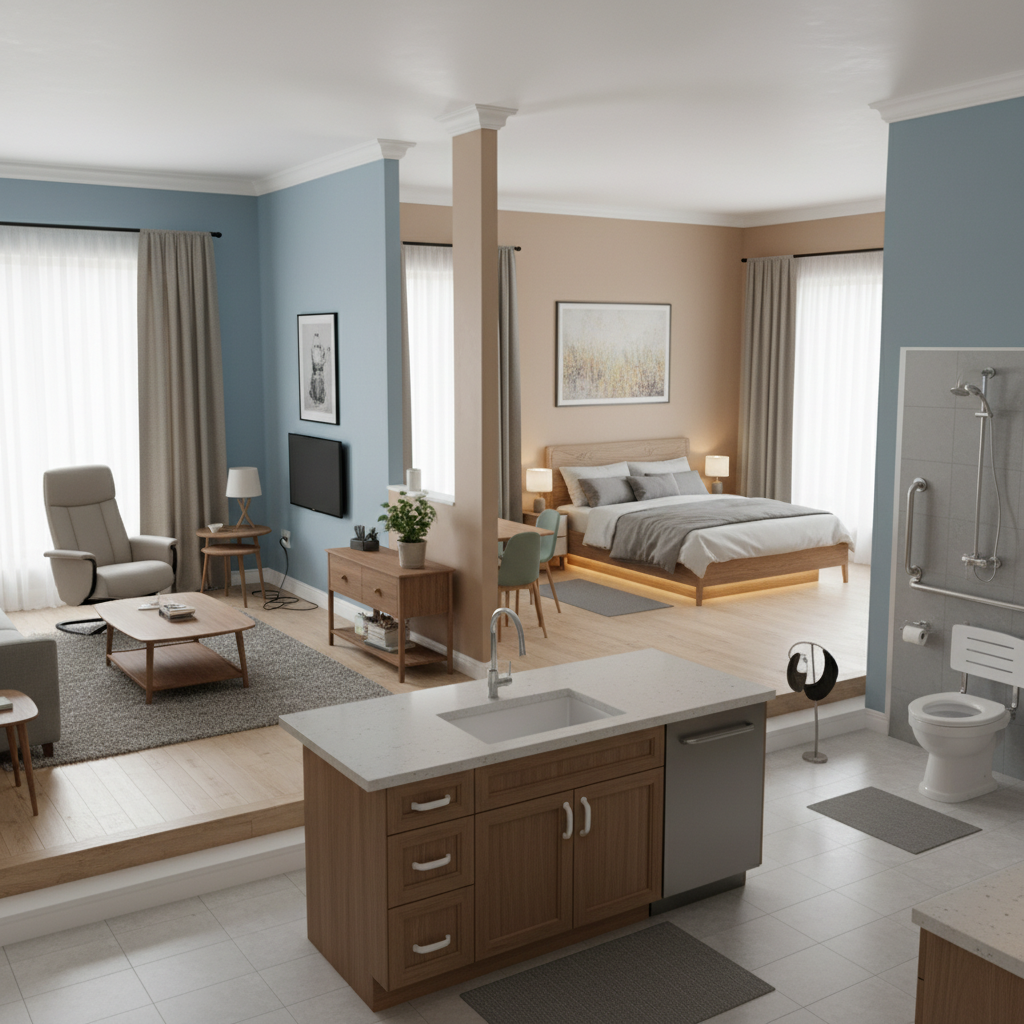
The bathroom is consistently identified as the most dangerous room in the home for seniors. Wet surfaces, hard fixtures, and the physical demands of bathing create a perfect storm of fall risk. Address these modifications first.
Essential Bathroom Modifications
- Grab bars: Install near the toilet, inside the shower or tub, and beside the bathroom entrance. Use wall-mounted bars anchored into studs, not suction-cup models
- Non-slip mats: Place inside the tub or shower and on the floor outside the bathing area
- Raised toilet seat: Reduces the distance the senior must lower themselves, easing strain on knees and hips
- Shower chair or bench: Allows bathing in a seated position, eliminating the risk of standing falls on wet surfaces
- Handheld showerhead: Enables bathing while seated and reduces the need to turn and reach awkwardly
- Night light: A motion-activated night light illuminates nighttime bathroom trips
- Temperature controls: Set the water heater to 120 degrees Fahrenheit or lower to prevent scalding
Bedroom: Nighttime Safety
Nighttime falls are particularly dangerous because they often occur when a senior is disoriented and lighting is poor. Focus on creating a clear, well-lit path from the bed to the bathroom.
Essential Bedroom Modifications
- Bed height: Ensure the bed allows feet to rest flat on the floor when sitting on the edge. Too high or too low increases fall risk
- Bed rail: Install a sturdy bed rail on the exit side to provide a handhold for getting up
- Clear pathways: Remove all rugs, cords, and clutter between the bed and door. Every trip hazard must go
- Night lights: Place motion-activated lights along the path from bed to bathroom and at the bedroom door
- Accessible phone: Keep a phone with large buttons and emergency contacts within arm's reach of the bed
- Light switch access: Ensure a light switch or lamp can be reached without standing up from the bed
- Non-slip flooring: If hardwood or tile floors are present, place a non-slip mat beside the bed
Kitchen: Burn and Fall Prevention
The kitchen presents both fall risks and burn risks. Modifications should address accessibility and prevent the need for reaching, climbing, or awkward bending.
Essential Kitchen Modifications
- Frequently used items: Move dishes, glasses, and food to counter height or lower shelves to eliminate reaching overhead
- Step stool elimination: Never allow step stools. If items cannot be reached safely, relocate them
- Anti-fatigue mat: Place in front of the sink and stove to reduce standing fatigue
- Stove safety: Consider an automatic stove shutoff device. Unattended cooking is a leading cause of house fires among seniors
- Adequate lighting: Install under-cabinet lighting to illuminate work surfaces
- Lever faucets: Replace knob faucets with lever-style handles that are easier for arthritic hands
- Non-slip flooring: Ensure kitchen flooring is non-slip, especially near the sink and stove where spills occur
Living Room: Furniture and Pathway Safety
The living room is where seniors spend significant waking hours. The focus here is on furniture accessibility and clear pathways.
Essential Living Room Modifications
- Chair height: Ensure chairs and sofas are high enough to stand from without excessive effort. Seat cushions or furniture risers can help
- Stable furniture: Remove or secure any wobbly furniture that might be used for balance support
- Remove throw rugs: All loose rugs must be removed or secured with double-sided tape rated for the floor type
- Cord management: Secure all electrical cords against walls and out of walking paths
- Clear pathways: Maintain a minimum 36-inch wide pathway through the room
- Remote controls: Consolidate to a single, simple remote with large buttons or voice control
- Good lighting: Ensure adequate ambient lighting with easy-to-reach switches or voice-activated smart bulbs
Stairs and Hallways: Fall Prevention
If the home has stairs, this area requires serious attention. Falls on stairs are among the most injury-producing incidents for seniors.
Essential Stair and Hallway Modifications
- Handrails: Install sturdy handrails on both sides of all staircases. They should extend beyond the top and bottom steps
- Non-slip treads: Apply non-slip adhesive strips to each step. Ensure they contrast visually with the step surface
- Lighting: Every stair area should be well-lit with switches at both the top and bottom
- Visual contrast: Mark the edge of each step with contrasting colored tape for those with reduced vision
- Hallway lighting: Install motion-activated lights in all hallways
- Consider alternatives: If stairs become too risky, explore stairlifts or moving essential living spaces to one floor
Entryways and Outdoor Areas
Essential Entry Modifications
- Outdoor steps: Add handrails and non-slip surfaces to all exterior steps
- Pathway lighting: Install solar or motion-activated pathway lighting to the front door
- Welcome mat: Remove or secure any loose welcome mats
- Door handles: Replace round doorknobs with lever-style handles throughout the home
- Threshold ramps: Add small ramps over any raised thresholds or door sills
- Porch and deck: Repair any loose boards and ensure railings are sturdy
General Home Modifications
- Smoke and carbon monoxide detectors: Test monthly and replace batteries annually
- Emergency plan: Post emergency numbers in large print near the phone and on the refrigerator
- Medical alert system: Consider a wearable medical alert device for emergency response
- Temperature: Set the thermostat to maintain a comfortable temperature; hypothermia risk increases with age
- Pest control: Maintain regular pest control to eliminate creatures that could cause startle responses
Frequently Asked Questions
How much does it cost to senior-proof a home?
Basic modifications like removing rugs, improving lighting, and reorganizing shelves cost very little or nothing. Mid-range modifications such as grab bars, bed rails, and non-slip treatments typically total $200-$800. Significant modifications like stairlifts or bathroom renovations can run $3,000-$15,000. Many modifications are eligible for tax deductions or may be covered by Medicaid waiver programs.
Should I hire a professional or do it myself?
Many modifications can be DIY projects, but wall-mounted grab bars and handrails must be installed by someone who can properly anchor them into wall studs. A poorly installed grab bar that pulls out of the wall is more dangerous than no grab bar at all. When in doubt, hire a certified aging-in-place specialist.
What is the single most important home modification for seniors?
If you can only make one change, install grab bars in the bathroom. Bathroom falls are the most common and most dangerous in-home falls for seniors. A properly installed grab bar next to the toilet and inside the shower can prevent the majority of bathroom falls.
Conclusion
Senior-proofing your home is an ongoing process, not a one-time event. Start with the bathroom and bedroom, the two highest-risk areas, and work through this checklist systematically. Many modifications are inexpensive or free, and the peace of mind they provide is invaluable. Review the checklist every six months as your loved one's needs may change over time. A safe home is the foundation of successful aging in place.
Written by